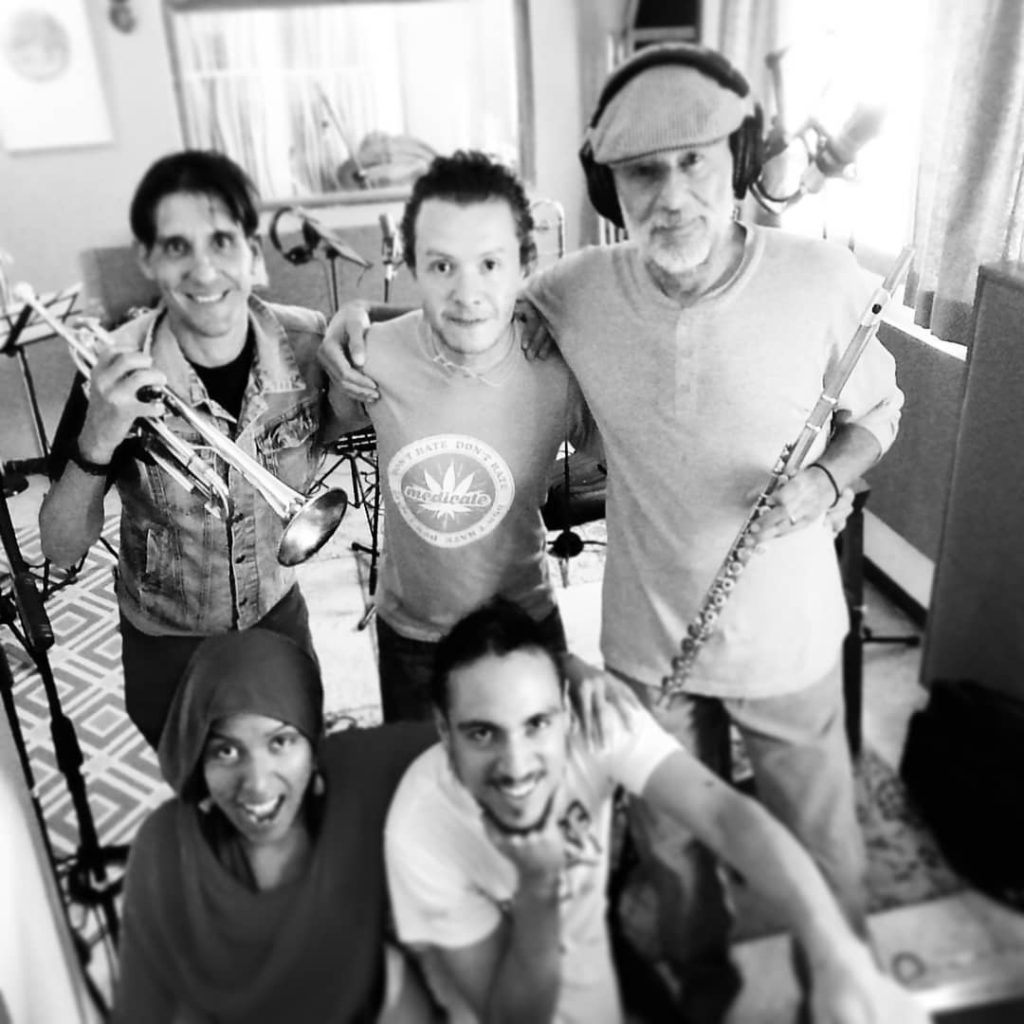
Making music in another language is a trip. Our Mexico album Papaya was the first Death Is A Business project where I had to compose, record and mix music predominantly speaking Spanish. When words fail, you just feel music and use your body, voice and facial expressions to communicate. It makes me remember why I love music, and how it transcends nearly all human barriers.
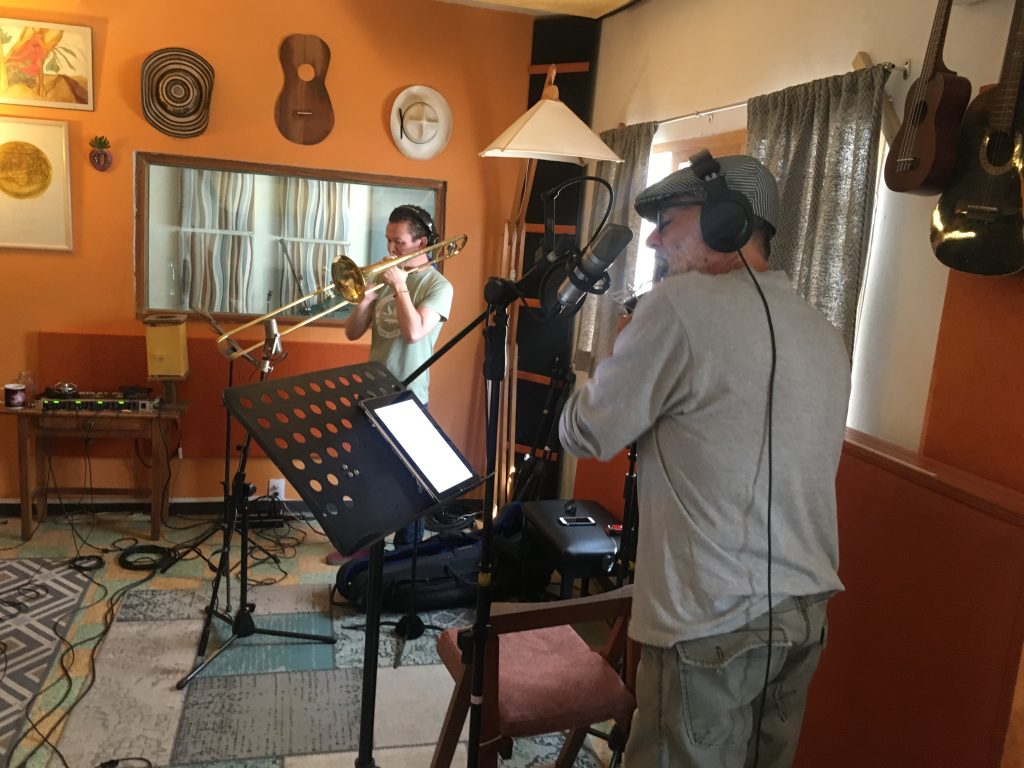
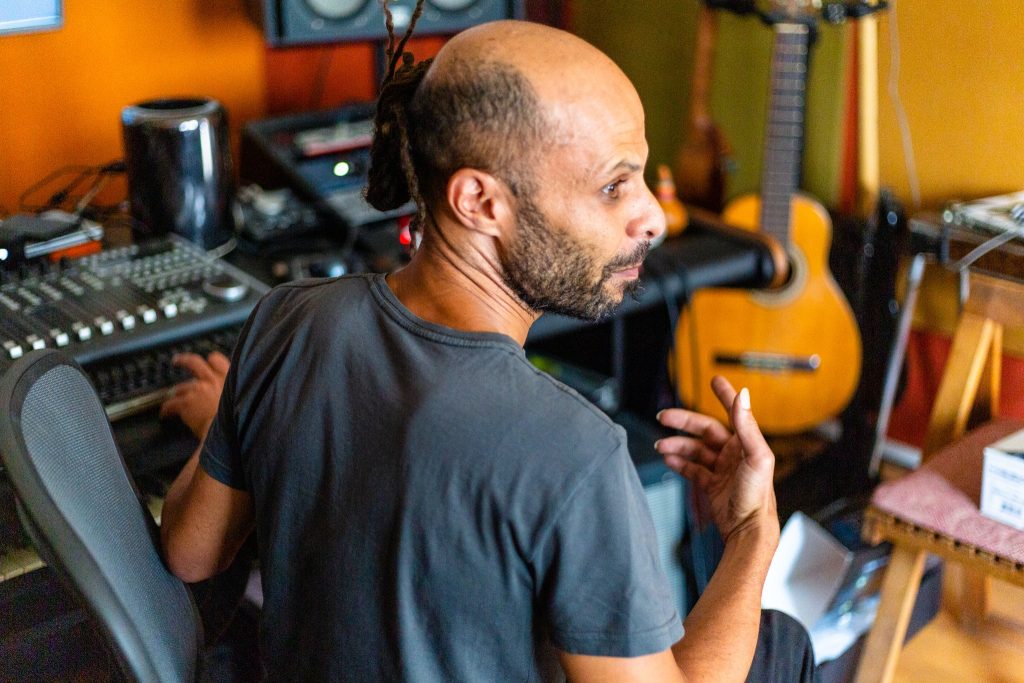
We sat down for an interview with Juan Cubas Fridman, a Latin Grammy-nominated musician and recording engineer based in Mexico City and owner of Cubetta Records. Juan works out of a fully equipped home studio where he records full bands and vocalists, plus mixes and masters. He told us about how he built his studio, the city’s music scene, and his own background as a first generation Mexican from a multicultural family. In 2020, we connected with Juan in Mexico City and he helped us record “Mother Earth” and “Golden Boy”. Later, we worked with him again when he mixed the first single released from our Mexico sessions—“Make Love”.
As soon as we walked in—surrounded by a grand piano, old guitars, and unfamiliar instruments from around the world—we knew we were at home.
If you’ve never worked in a music studio, many of the terms might seem confusing. There are three phases in recording an album. In the “pre-production” phase, you decide which songs to record and share scores and lyrics with the musicians and singers. The “engineer” is the person who records each instrument and singer.
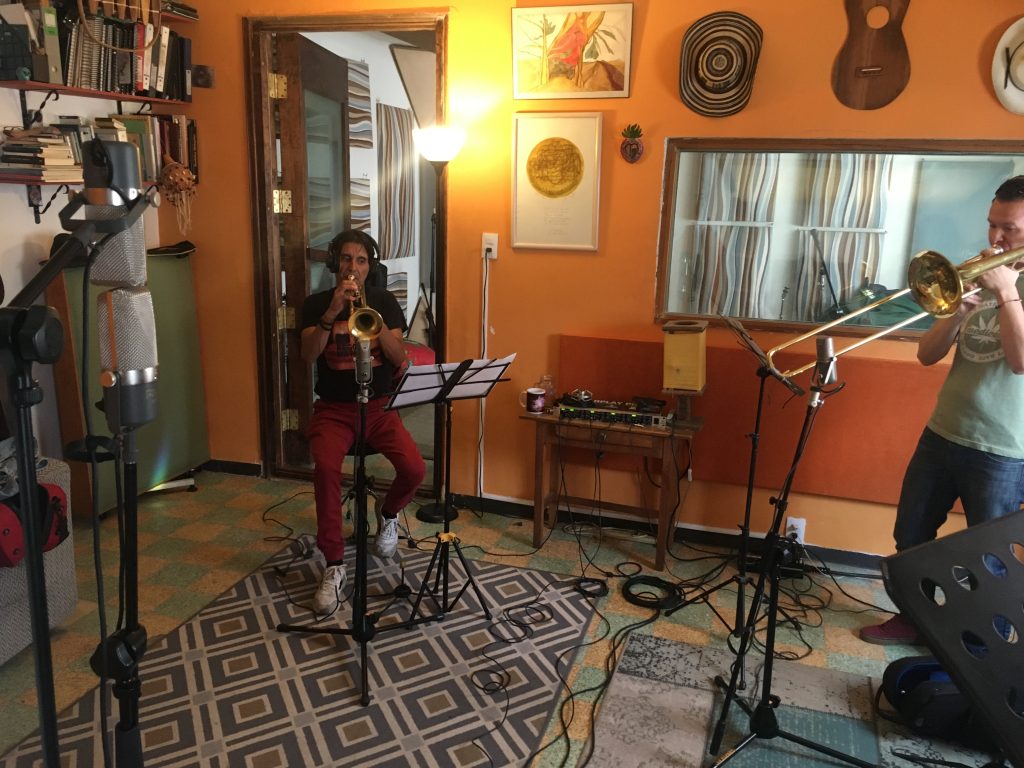
The “production” phase is long hours spent in the studio. The engineer selects microphones and other equipment to record each instrument and decides whether musicians will all play together or separately.
Finally, the “post-production” phase turns the raw recordings into an album that’s ready to hit the stores, radio or streaming services like Spotify. A “mix engineer” first cleans up recordings by removing unwanted noise. Then the engineer “mixes” the song by adjusting volume for all tracks and improving the tone—like adding more bass, or making the vocals clearer. Finally, a “mastering engineer” takes the song and makes final adjustments to make sure the songs will sound right—and play loud enough—whether on the radio, Spotify, a cell phone or car speakers.
Below is our interview with Juan, edited for clarity. You can find a playlist of music he’s recorded here!
How long have you run your studio?
The studio began in music school in 2006, when I wanted to record a group l played in. Many friends asked me to record them too. Over 15 years later, it’s now my main passion after playing music.
Was your studio always in your same house?
Cubetta Records began in a room in an apartment. Later I moved it to a larger studio I rented for five years in Coyoacan. I’ve been in my current studio and home for 11 years. I’ve pushed this space to the limit of its recording capacity!
It works very well to record almost anything. I specialize in recording live bands with all musicians playing together. In some cases the space is too small. I can record up to a septet (seven people). A quintet (five) or sextet (six) works perfectly, but it all depends on the instrumentation.
Do you have any preferences?
I record lots of jazz, folklore from Mexico, Colombia and Argentina, tango, fusion, world music… I specialize in any genre of acoustic music, with organic roots, with more complex post production. My obsession is to capture the instruments’ sound as closely as possible. To get a great sound from the drums, bass, cello, or electric guitar. This is why people seek me out. I don’t modify the band’s sound much in post production, I just make them sound organic.
So it doesn’t sound over produced.
I want the recording to already sound great even with a rough mix. Then the final mix comes much easier, so I use less effects. My sound is closer to Buena Vista Social Club or Toto la Momposina, or a New York jazz group, versus something like Billie Eilish or progressive rock.
How is the music scene in Mexico City?
It’s a very strong and purposeful scene, with artists at a very high level in all types of music. I record a lot of jazz so I’m happy to see our jazz musicians getting more mainstream attention, as well as our folklore, cumbia and regional Mexican music being valued.
For many years here in Mexico we tried to imitate other countries—like salsa in Cuba, rock in England or the US, jazz in New York—but now there is more initiative here to create distinct sounds, with more message and commitment. We have many talented young people.
What is your family history? How has this multicultural experience affected you?
I was born here in Mexico but my father is Cuban and my mother is Argentinian. I have gone many times to Cuba. And I went the year prior to Argentina, and often. Though I’m traveling less since becoming a father!
But when I was young I always felt like I wasn’t Cuban—or Argentinian, or Mexican. Then I found son jarocho music and went deep into it. That made me 100% Mexican.
Of course, Cuban and Argentinian music has influenced me but my mission is much closer to Mexican music—to bolero, son jarocho, cumbias, and marimba, than to son cubano. I will record anything but I don’t play in a son cubano group. I never went deep studying Cuban music like tango or rumba. Of course it’s an influence in my life—I need only to look in the mirror and see my father’s roots in me.
How many states in Mexico have you visited?
I’ve mostly visited areas in the south. So far I have visited 25 or 26 of the 31 states. But I identify strongly with the southern states—Oaxaca, Veracruz and Guerrero. Maybe it’s the southern climate, or their personalities.
Northerners have their own distinct culture. I do enjoy their corridos, musica de tierra caliente, and corridos tumbados—I don’t like the lyrics but I like the music.
How do you manage to strike a balance between your studio work and playing your own music?
The two complement each other. I never studied audio to dedicate myself to recording, but I studied music since age 14. Everything I studied—classical, jazz, and pop music—is the foundation that helps me most in the studio, when I have to make decisions. It’s my ear, not technical skill, that guides my decisions.
How does your audio knowledge—of frequencies, volume, dynamics—help you write music?
When I write I think more about the song, not so much about the production. When I have what I believe is a good song, then I think about how I could produce it. You can’t make a bad song sound good, but a great song always works.
What is a new artist or album you’re listening to that you would recommend?
She’s not too new but her name is Silvana Estrada, I saw her live in January and I was fascinated.
Another singer is Augusto Braucho—these two I am listening to now who I enjoy very much. Very simple music but full of messages, depth, wisdom and authenticity.
What is your advice to someone in Mexico or anywhere around the world with a dream to work in music or recording?
You must always do something for love and passion, not for money—you’ll do it better that way. You have to let things happen. The path is slow, to be the instrumentalist you want to be, or to be a recording engineer making music you love with musicians who you admire.
In my case I focus on getting the best sound capture, choosing the right mic and placement. You can always hear if it’s right or wrong. If it’s off, you have to move the mic. Don’t assume that in post-production you can fix the problems in the recording.
My other advice is don’t try to let your view as an engineer come between the band’s vision. Being a band’s ‘producer’ and working on their production are two different jobs. You will learn through experience when you should intervene or not in the process.
You can have the most expensive guitar in the world but that doesn’t make you a better guitarist. Don’t think that because you bought the best microphone that you’ll get the result you want—you need to know how to use it. Try to achieve more with less.